


The Organisation Of Small Libraries
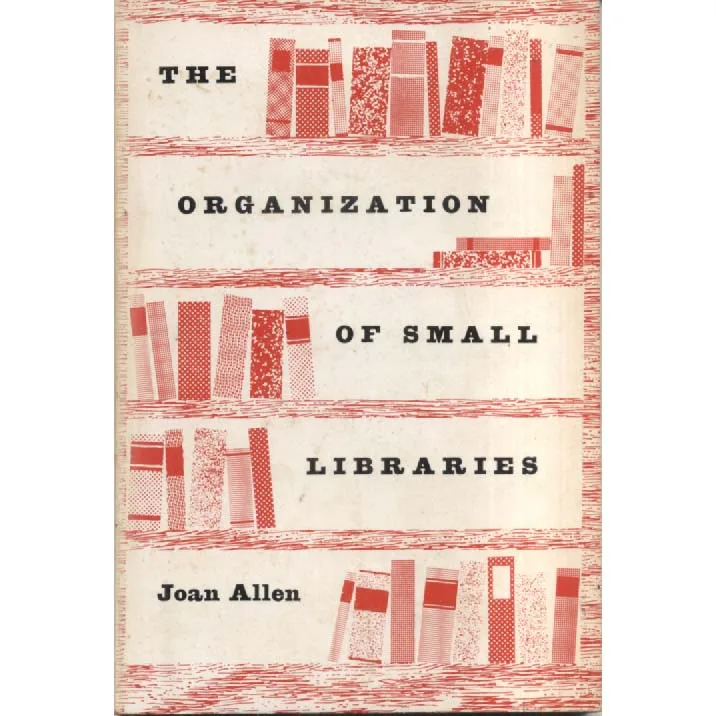
Publisher: Oxford University Press
Format: Paperback
ISBN: none
There are books that dream of changing the world, and then there are books that quietly explain how to catalogue pamphlets without civilisation collapsing. The Organisation of Small Libraries by Joan Allen, published by Oxford University Press in 1961, belongs magnificently to the latter tradition: a calm, practical and deeply civilised manual from an era when Britain still believed proper indexing systems might hold society together through sheer administrative determination.
And honestly, they may have had a point.
At first glance, this sounds almost impossibly niche. A book about organising small libraries. Yet that is precisely what makes it wonderful. This is not a glossy celebration of vast national collections with marble staircases and billionaire donors. No — this is about the humble realities of actual libraries: parish libraries, village institutes, church reading rooms, school collections, local reference shelves and all the tiny stubborn outposts of organised knowledge scattered quietly across mid-century Britain.
Joan Allen approaches the subject with the kind of composed authority unique to librarianship before computers arrived and ruined everyone’s handwriting. Somewhere in these pages lies advice on cataloguing, classification, shelving, accessioning and all the hidden machinery required to stop books descending into complete anarchic disorder. Because every library, however small, exists permanently on the brink of chaos. One misplaced gardening manual and suddenly Thomas Hardy is living beside veterinary science.
Published in 1961, the book radiates the atmosphere of post-war Britain at its most methodically hopeful. This was a period when institutions genuinely believed in systems. Filing systems. Decimal systems. Classification systems. Britain had endured war, rationing and austerity, and its response was apparently to organise everything very carefully in duplicate.
The Oxford University Press imprint only deepens the charm. OUP once produced vast numbers of these sober, intelligent instructional books under the assumption that ordinary adults might willingly spend evenings learning about indexing procedures. Imagine such confidence in the public now. Today the same subject would probably emerge as a “content management solution webinar” hosted by a man called Tyler.
And yet there is something oddly beautiful about old library manuals. They reveal a vanished faith in knowledge as a public good. Small libraries mattered because books mattered, and books mattered because people believed reading could improve lives rather than merely optimise personal branding. Every village library represented a tiny declaration that civilisation should remain accessible within walking distance of the post office.
Physically, this copy is in good condition, which is impressive considering practical library books often lived unusually strenuous lives. One imagines this volume spending decades beside index cards, rubber date stamps and sternly labelled shelves, perhaps under the supervision of a cardiganed librarian capable of silencing a room with a single glance. These were working books, not decorative objects. They earned their survival.
There is also a wonderful irony in reading a manual on small libraries today, when entire generations carry infinite searchable information in their pockets yet still somehow cannot locate a PDF downloaded three hours earlier. Joan Allen’s world was slower, more physical and infinitely more dependent on little handwritten systems that actually worked.
A delightful curiosity for librarians, bibliophiles, collectors of educational publishing, local historians or anyone who appreciates the quietly heroic infrastructure behind organised knowledge. Also highly recommended for people who enjoy books about systems, procedures and the noble human dream that if everything is labelled properly, perhaps existence itself might become manageable.
Crappy Old Books: preserving the paperwork of civilisation one slightly dusty hardback at a time.
Keep browsing: See more Non-Fiction books Other books by Joan Allen
